Problem, solved.
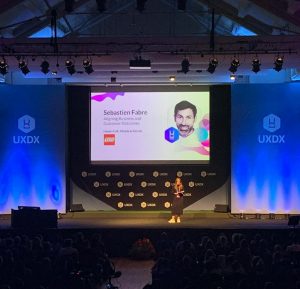
At UXDX 2019 in Dublin, in front of 1500+ attendees, I explained how successful products deliver on both the customer and the business needs, but aligning the two can be challenging. How can teams map their activities back to the business and customer KPIs?
The Background
In my keynote, I shared insights from my career across various organizations, such as Intel, Kodak, Orange, and Fujitsu, leading up to my current role at LEGO. Across these companies, I witnessed firsthand how misalignment between business goals and user needs can lead to disastrous outcomes. For example, at Intel, a project internally dubbed “Never Going Into Production” cost $40 million and ultimately failed. Similarly, at Orange, a seemingly trivial decision -choosing the wrong color for a set-top box light – led to millions of customer support calls. These experiences highlighted the critical need for aligning both business and customer goals.
However, it wasn’t until LEGO faced its own near-collapse in 2003 that the company truly understood the devastating impact of this misalignment. LEGO realized that while it was innovating in many ways, there was a disconnect between what customers wanted and the company’s business priorities. This led to a major shift at LEGO, where aligning customer satisfaction with business outcomes became a driving force in the company’s transformation.
At LEGO, we adopted a clear and consistent vision across product teams, a vision that transcended silos and ensured that every department understood both customer needs and business goals. This alignment strategy helped us not only recover but rebuild LEGO into the global brand we see today.
The Benefits
By embedding alignment into our product development process, LEGO has seen remarkable results. Aligning business goals with customer needs has not only helped us recover from past challenges but also positioned us for long-term success. Since 2003, we’ve rebuilt LEGO’s market share, expanded globally, and continuously innovated to meet the changing needs of our customers.
This customer-centric approach has been crucial in driving business outcomes. By creating products that resonate deeply with users, we’ve fostered brand loyalty and trust. Our LEGO Ideas platform, for example, has helped us tap into the creative potential of our customers, allowing them to contribute to the product development process. This has strengthened the bond between LEGO and its users while also leading to new revenue streams.
Moreover, the use of OKRs has allowed us to maintain focus on both customer satisfaction and business growth, ensuring that every product release is a step forward in both domains. Through regular check-ins and transparency, teams remain aligned on objectives and are empowered to make decisions that benefit both customers and the business. The result has been a significant reduction in wasted resources and a higher return on investment for our projects.
Ultimately, LEGO’s commitment to aligning customer and business needs has resulted in a more resilient, innovative, and customer-focused company. As we continue to expand and innovate, we know that maintaining this alignment is the key to our continued success.
Digital
problem
solver…
Let’s get together and talk about your unique challenges – I’m friendly, approachable and love to work with other people to solve digital problems using innovative technology.